Meet Ollie
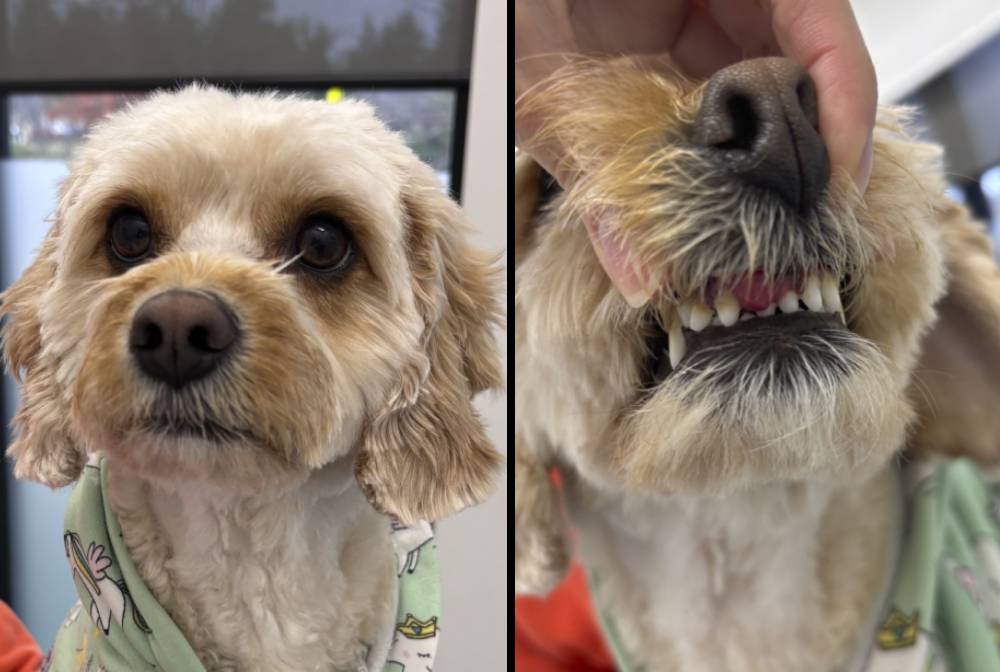
Ollie is a lively four-year-old Cavoodle whose owners noticed a small red lump developing on his gum. Concerned that something wasn’t right, they promptly took him to their family veterinarian at Molonglo Vet.
Their quick action made all the difference.
Finding the Cause
After examining Ollie, the veterinary team performed a biopsy of the lump. The results confirmed a plasma cell tumour—a type of cancer arising from plasma cells, which are part of the immune system and normally produce antibodies to help fight infection.
Referral for Specialist Care
Ollie was referred to BVRS for specialist surgical assessment.
The tumour was located at the front of his upper jaw, close to his incisor teeth. While any cancer diagnosis is understandably concerning, tumours in the mouth can often behave more aggressively than those found elsewhere in the body.
Fortunately, plasma cell tumours are one of the rare oral cancers with a more favourable outlook when they occur in the mouth, particularly when diagnosed early and completely removed.
To give Ollie the best chance of a cure, surgery was recommended to remove the tumour along with a margin of healthy surrounding tissue, ensuring that no cancer cells were left behind.
The Surgery
Ollie underwent a rostral maxillectomy, a procedure that removes the front portion of the upper jaw, including the affected bone and incisor teeth.
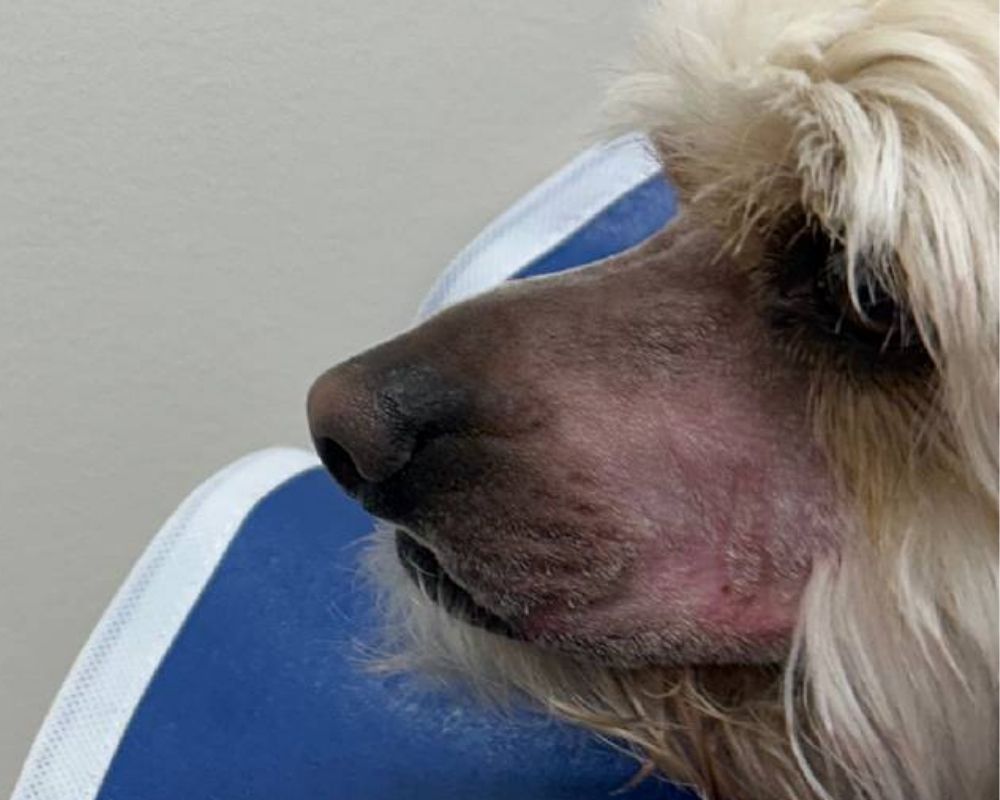
Advanced surgical and anaesthetic techniques helped maximise both safety and comfort. Ollie received targeted local anaesthetic nerve blocks to provide excellent pain relief during and after surgery, as well as careful reconstructive techniques to preserve the support of Ollie’s nose and minimise cosmetic changes, such as the “nose droop” that can occur after this type of surgery.
Recovering at Home
After surgery, Ollie’s owners played an important role in his recovery. During his recovery, it was crucial to prevent excessive movement at the surgery site. They kept Ollie in an Elizabethan collar (cone) to prevent rubbing or scratching at the surgical site and fed him a soft-food diet while his mouth healed. They also had to pack away his balls and chew toys and avoid tug-of-war games until the healing was complete.
The Outcome
Ollie recovered beautifully from surgery and quickly proved himself to be an absolute trooper.
His recovery was excellent. He healed without complications, and his facial appearance remained natural, with no nose droop.
Laboratory testing confirmed the tumour had been completely removed with clean surgical margins.
Today, Ollie is cancer-free and back to enjoying life with his family.
Ollie’s story highlights the importance of early detection.
If you notice a lump, swelling, bleeding, bad breath, loose teeth, or any other change in your pet’s mouth, don’t ignore it. Book in to see your primary care veterinarian and have it checked out. Many oral conditions can be successfully treated, and when oral tumours are identified early, prompt specialist treatment can provide an excellent outcome.